Vape settings for clouds: wattage and airflow
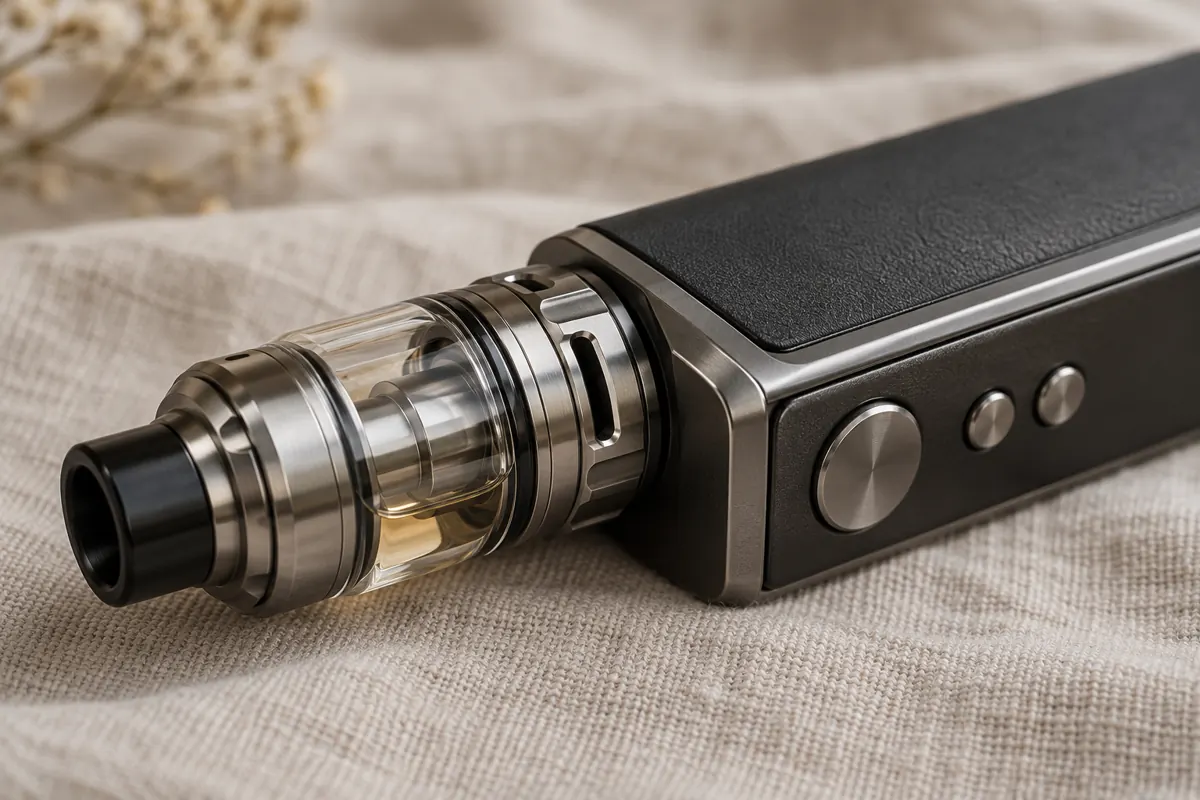
The same tank on the same device can produce a thin lukewarm wisp or a full warm cloud, and the difference is rarely the hardware. Wattage and airflow are the two controls that decide it, and they only work when they are set against each other rather than one at a time. Getting your vape settings right is a short methodical process, not a matter of finding a magic number online. Here is how to work through it without burning a coil in the process.
What vape settings actually control
Two things happen on every draw. The coil converts electrical energy into heat, and moving air carries the resulting aerosol away from it. Wattage governs the first, airflow governs the second, and the wick sitting between them has to keep the coil supplied with liquid throughout.
Good vape settings are simply the point where those three stay in balance. Enough power to vaporise properly, enough air to carry the result and cool the coil, and a wick fast enough to keep up with both. Push any one of them past what the others support and the balance breaks in a way you can taste immediately.
This is why copied numbers from a forum rarely transfer. The same figure on a different coil, a different liquid or a differently sized airflow ring produces a different draw, and the only reliable approach is to find the point on your own hardware.
Starting from the range on the coil
Every factory coil arrives with a recommended range, printed on the coil itself or on its packaging by the manufacturer. That range is the starting frame and it is not a suggestion to ignore, since it reflects the wire, the mesh area and the wicking the maker built in.
The method is to begin at the lower end of that range and climb in small steps, a couple of watts at a time, taking a draw at each step. What you are listening for is the point where the vapour turns full and warm, the flavour opens up and nothing tastes scorched.
Keep going past that point and you will find the ceiling quickly. It arrives as a sharp acrid note at the back of the throat, and the useful setting sits just below where that note first appears. Write it down, because you will want it again after the next coil change.
Cells matter here too. As a pair discharges, a regulated device compensates and draws more current to hold the same output, which is one more reason to work with a matched pair whose published limits you have read rather than a mismatched set.
Opening the airflow for volume
Airflow does more than change how a draw feels. Every extra millimetre of open slot brings cooler air across the coil, which lets the coil run harder without overheating, and it increases the sheer volume of air carrying the aerosol out.
For direct lung vaping, that means the ring sits well open. A tight setting concentrates heat, makes the draw feel restricted and thins the cloud, which is exactly what mouth to lung vapers want and exactly what a cloud focused setup does not. The relationship between airflow and volume is developed further in our guide to cloud chasing.
The two controls move together. Open the airflow and the draw cools, which usually leaves room to raise the wattage a step. Close it and the effective heat rises at the same setting, so the wattage generally has to come back down. Adjusting one without revisiting the other is the most common mistake in the whole exercise.
Matching vape settings to the coil and the liquid
Wicking speed sets the ceiling more often than power does. A thick glycerine heavy liquid moves through cotton more slowly than a thinner one, so a bottle change alone can shift where the acrid note appears even though nothing else moved.
That is the practical link between your vape settings and your shelf. High glycerine shortfills, the British norm for sub-ohm tanks, generally want a well fed wick and a moment of patience after a refill, as explained in our guide to full VG e-liquid.
Coil age plays the same trick in reverse. A coil approaching the end of its life wicks less efficiently and starts producing that scorched edge at a setting it handled comfortably a week earlier. When a setting that always worked suddenly stops working, the coil is usually the variable rather than the device.
The device itself only needs to have comfortable headroom above where you actually sit, which is one of the criteria in our comparison of box mods for big clouds.
Reading a dry hit before it ruins the coil
The acrid taste has a specific cause: the coil is heating faster than the wick is resupplying it, so a section of cotton is drying out and scorching. Once cotton has genuinely burnt, the flavour never fully comes back and the coil is spent.
The warning signs come earlier than the taste. Flavour flattens slightly, the vapour thins on the second or third draw in quick succession, and the draw feels hotter than usual. That is the moment to pause rather than push on.
Three things fix it. Drop the wattage a step, slow the pace between draws to let the wick recover, and prime a new coil properly by wetting the cotton and letting it stand before the first draw. Chain vaping a freshly fitted coil at a high setting is the fastest way to write one off.
Modes, curves and preset profiles
Most devices offer more than plain wattage, and it is worth knowing what earns its place. Temperature control limits how hot the coil is allowed to get, which suits particular wire types but not the stainless mesh most factory coils use, and it needs the right material setting to behave.
Ramp curves let you shape how power is delivered across a draw, typically a firmer opening followed by a lower sustained level. On a large coil that shortens the wait for vapour without running the whole draw hot, and it is the mode most worth experimenting with once your baseline is settled.
None of it replaces the baseline. Plain wattage, found by increments against an open airflow, already produces the full result on a modern sub-ohm coil, and the extra modes refine an already correct setting rather than rescue a wrong one.
Frequently asked questions
How do I know my wattage is too high?
An acrid or burnt note, the dry hit, means the coil is heating faster than the wick can supply it. Step the power back down and give the cotton time to recover.
Should airflow always be wide open for clouds?
Well open, yes, because it cools the coil and increases volume. The exact position depends on the coil, the liquid and how warm you like the draw, so it is worth fine tuning.
Where do I find the recommended range for a coil?
It is normally printed on the coil body itself, and repeated on the packaging by the manufacturer. That range is the frame you work inside rather than a target to exceed.
Do settings change when I switch e-liquid?
Yes. A thicker glycerine heavy liquid wicks more slowly and often needs a slightly different balance of power and pacing to avoid drying the cotton out.
Are ramp curves worth using for volume?
They can shorten the wait for vapour at the start of a draw. They refine a baseline that already works rather than fixing one that does not, so set the plain wattage first.
Dialling it in, step by step
The whole method fits in a few lines. Fit and prime the coil properly, open the airflow to suit a direct lung draw, start at the bottom of the manufacturer’s range, and climb a couple of watts at a time until the vapour is full and warm. Stop below the point where any scorched note appears, then leave it alone.
Revisit the setting whenever something changes: a new coil, a different bottle, a different tank. Each of those moves the balance, and each deserves the same short walk up the range rather than an assumption that yesterday’s figure still applies.
Good vape settings are the product of patient increments and attention to the wick, not of a number borrowed from someone else’s setup. Once you have found yours, note it against the coil and the liquid it belongs to, and the next set of vape settings will take two minutes instead of an evening.
Editorial content for adult readers only. Vaping products usually contain nicotine, a substance that causes addiction. Not for sale to under-18s in the United Kingdom. This article is not a buying recommendation.